Reporting requirements for directors increased
From the tax year 2025-26 directors of close companies are required to provide additional information in their tax returns, even where no income has been received.

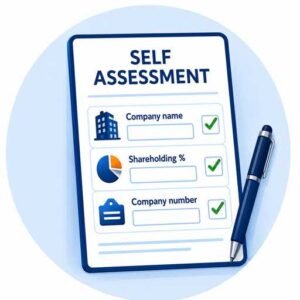
HMRC has updated the self assessment tax return for the tax year just ended (2025-26). The form includes additional boxes on the employment pages (SA102) in relation to close companies.
A company is a ‘close company’ if it is controlled by five or fewer participators or by any number of participators who are also directors; or if more than 50% of the assets on a winding up would be distributed to five or fewer participators (or participators who are directors). The term ‘participator’ is used to describe the shareholders and others with a financial interest in the company for example a loan provider.
On the previous form, it was sufficient to tick a box to say that you were a director of a close company during the year. The updated form asks for more detailed information about each close company directorship, including the company’s name and registration number; the amount of dividends received from it (even if this is zero); and the maximum percentage of the share capital held by you during the year.
If you are a director of more than one company, a separate SA102 must be completed for each directorship even where no salary, dividends or other income have been received. HMRC may charge penalties for incomplete or inaccurate returns.
If you are a director of one or more close companies we can help you collate the necessary information to complete the employment pages on your self assessment tax return.
Are you missing out on a PAYE refund?
Employees and pensioners are being encouraged to check whether they are due a PAYE tax refund.

HMRC figures suggest that more than 730,000 PAYE refunds went unclaimed last year, with the average repayment worth approximately £855.
PAYE overpayments can arise for a number of reasons. Common examples include being placed on the wrong tax code because HMRC held incorrect income information; changing jobs during the tax year and being paid by two employers in the same month; starting to receive a workplace pension; or receiving employment and support allowance or jobseeker’s allowance.
In the past HMRC would often issue PAYE refunds automatically. However since 31 May 2024 taxpayers are generally required to claim any repayment due to them. You can claim a refund through the HMRC app; via online bank transfer; through a personal tax account; or by requesting payment by cheque.
It is worthwhile reviewing your PAYE position, particularly if your employment or pension circumstances changed during the year. We can help review your tax position and assist with making a refund claim.
Making Tax Digital: ceasing to trade
Individuals and landlords with gross income from self-employment and/or property above £50,000 on the 2024-25 tax return are mandated to join Making Tax Digital (MTD) from April 2026. But what happens if that income has ceased by then?
 If you completely stopped trading before 6 April 2026, and you have no other qualifying income, you must notify HMRC that although you fall within the MTD for income tax rules from April 2026, your qualifying income ceased before that date. You can do this by phone or by webchat. This will mean that you do not need to sign up for MTD.
Where an individual ceases to trade on or after 6 April 2026, they will need to sign up for MTD and submit quarterly updates until that trade stops. To end your MTD obligations you will need to submit the final quarterly update covering the period in which your income ceased; and declare the business end date on your HMRC services account before the next quarterly update is due. We can help you with this.
You must complete a final self assessment tax return for the tax year in which the income ceased.
If you have any residual qualifying income, even if this is minimal, you will need to remain in MTD for at least three years. For example, if you ceased your sole trade on 5 April 2026 but you continue to receive rental income of £3,000 per year from a property that you own, you must continue to create digital records and send quarterly updates for the property income, even though it is below the MTD threshold.
If your qualifying income falls below the relevant threshold for three consecutive years, you can choose to continue using MTD voluntarily; or opt out of MTD and submit a self assessment tax return instead.
For example, if you are required to join MTD for income tax in April 2026 you will be able to opt out after the end of the 2029-30 tax year if your qualifying income is:
- £30,000 or less based on your 2025-26 tax return;
- £20,000 or less based on your 2026-27 tax return; and
- £20,000 or less based on your fourth quarterly update for 2029-30.
We have been preparing to help clients navigate MTD for income tax for some time. Contact us to find out what you need to do to meet the requirements.
Public EV charging standard-rated
HMRC has reconfirmed that supplies of electricity for charging electric vehicles (EVs) at public EV charging points is standard-rated for VAT purposes.
Electricity supplied at public EV charging points is subject to VAT at the standard rate of 20%, rather than the reduced 5% domestic rate that often applies to home charging. The clarification continues to create complications for businesses and employees reclaiming VAT on electric vehicle costs, particularly where vehicles are charged away from home.
The tax landscape for EVs is gradually becoming less generous. The company car benefit-in-kind (BIK) rate for EVs increased to 4% this year and is set to rise annually, reaching 9% by 2029-30. In addition, electric vehicles are now being brought into the Vehicle Excise Duty (VED) regime through the introduction of EVED charges.
Despite these changes, EVs remain far more tax-efficient than petrol or diesel alternatives for companies and owner-managed businesses. Even with rising BIK percentages, the tax cost for directors and employees using EV company cars is still dramatically lower than for traditionally fuelled vehicles. Combined with lower running costs and favourable capital allowances, EVs continue to represent one of the most attractive company car options currently available.
If you are considering purchasing a car through your limited company, speak to us about the tax implications and potential tax savings.
Approved mileage allowance
Employees and business owners could be entitled to an additional £1,000 per year in tax relief for business journeys undertaken in personal vehicles.
If you use your own vehicle for business travel you may be entitled to tax relief to help with the cost of owning and running your vehicle. The mileage allowance is the maximum tax-free amount you can be repaid by your employer, or by your business if you are self-employed. The Government has increased the mileage allowance for cars and vans by 10p per mile from 45p to 55p per mile for the first 10,000 miles in the tax year. This equates to a maximum of £5,500 (previously £4,500) that your company or your employer can pay you for the first 10,000 miles without incurring national insurance or income tax. The rate for any mileage over 10,000 remains at 25p per mile.
You can claim the mileage allowance every time you drive somewhere for work in your own vehicle, for example to visit a customer, attend a meeting, or see a supplier but it cannot be claimed for ordinary commuting to and from your place of work. An additional 5p per mile can be paid per passenger, provided that the journey is also business travel for the passenger.
This change, which has been back dated to apply for journeys made on or after 6 April 2026, is the first increase to the mileage allowance since 2011. The increase only applies for cars and vans; the rates for motorcycles and bicycles remain unchanged.
Approved mileage rates 2026-27
Vehicle type | First 10,000 miles | Each mile over 10,000 |
Cars and vans | 55p (was 45p) | 25p |
Motorcycles | 24p | 24p |
Bicycles | 20p | 20p |
If your employer pays you less than the approved mileage rate, you can reclaim tax on the difference. If you are self-employed you can use the rates as part of the simplified expenses claim on your tax return instead of having to calculate the exact running costs of your vehicle.